
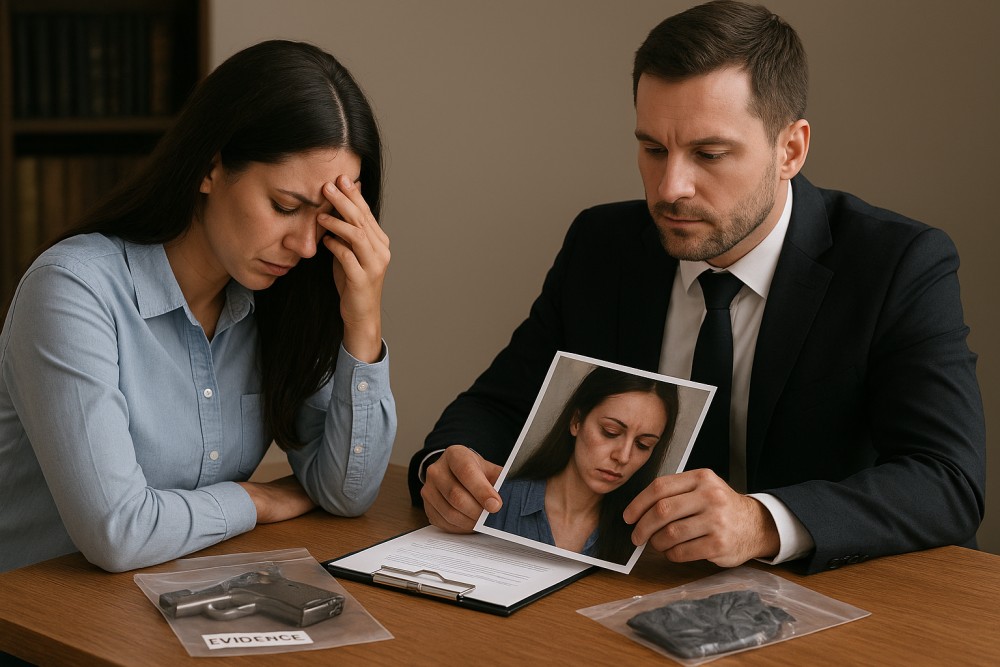
In domestic violence cases, evidence can make or break your defense. Whether you’re the accused or the alleged victim, the court’s decision often depends on what can be proven — not just what’s claimed.
Understanding how evidence works in South Carolina domestic violence cases can help you protect yourself and your future.
At Seaton & Duncan, Attorneys at Law, LLC, our criminal defense attorneys know how critical evidence is in shaping the outcome of these cases. We work with clients to uncover inconsistencies, challenge weak claims, and present facts that tell the full story.
Understanding How Domestic Violence Is Proven in South Carolina
Under S.C. Code §16-25-20, domestic violence involves causing or attempting to cause physical harm to a household member, or threatening harm with the apparent ability to carry it out. To convict someone of domestic violence, the prosecution must prove each part of the charge beyond a reasonable doubt.
That means they need solid, credible evidence to show that an act of domestic violence occurred — not just someone’s accusation.
Types of Evidence in Domestic Violence Cases
1. Physical Evidence
Physical evidence includes photographs of injuries, torn clothing, weapons, or damaged property. While this kind of evidence can be persuasive, it can also be misinterpreted. For example, an injury might have occurred accidentally or in self-defense.
A defense attorney can challenge whether the physical evidence actually supports the prosecution’s version of events.
2. Witness Testimony
Witnesses — including neighbors, family members, or law enforcement officers — often testify about what they saw or heard. But human memory isn’t perfect. People may misremember events or repeat things they didn’t see firsthand.
A skilled defense lawyer can identify inconsistencies or biases in witness testimony that may weaken the State’s case.
3. Digital Evidence
In today’s world, text messages, social media posts, call logs, and emails often play a huge role in domestic violence cases. These records can show context, establish timelines, or even disprove claims of harassment or threats.
It’s important not to delete or alter any messages — your attorney can review digital evidence to decide how it may help your defense.
4. Police Reports and 911 Calls
Law enforcement reports are a key part of most domestic violence prosecutions. However, mistakes can happen. Officers may misinterpret statements or overlook important facts in the heat of the moment.
An attorney can review these reports for errors, missing information, or bias. Similarly, 911 recordings may reveal inconsistencies between what was said during the call and later statements.
5. Medical Records
Medical documentation of injuries can be powerful evidence — but it’s not always definitive. Some injuries may not align with the story given to police, or they may have occurred earlier than claimed. A defense lawyer can consult medical experts to review these details carefully.
How the Defense Uses Evidence to Your Advantage
A strong defense isn’t just about denying allegations; it’s about telling your side of the story with proof. At Seaton & Duncan, our attorneys carefully review every piece of evidence the prosecution plans to use and investigate any that may have been overlooked.
Here’s how evidence can help your defense:
- Expose false or exaggerated claims: Inconsistent stories or timelines can reveal that the accuser’s account isn’t credible.
- Support self-defense claims: Physical or digital evidence may prove that you were protecting yourself or someone else.
- Show lack of intent: The evidence may indicate that the alleged incident was accidental, not intentional.
- Highlight procedural errors: If police gathered evidence illegally or failed to maintain proper chain of custody, it can be excluded from court.
What Happens When There’s Little or No Evidence
Domestic violence cases sometimes rely on “he said, she said” testimony with little physical proof. When that happens, credibility becomes the central issue.
Without strong, corroborating evidence, the prosecution may struggle to meet its burden of proof. Your attorney can emphasize this lack of evidence to argue for a dismissal or acquittal.
At Seaton & Duncan, we know how to identify when a case rests on weak evidence — and how to use that to your advantage.
Why It’s Crucial to Have a Defense Attorney
Trying to handle a domestic violence charge on your own is risky. Evidence can be complex, and prosecutors are trained to interpret it in ways that make you look guilty.
A criminal defense attorney can:
- Investigate the evidence from all angles
- Interview witnesses and obtain expert opinions
- File motions to suppress illegal evidence
- Negotiate with prosecutors to reduce or dismiss charges
- Represent you at trial if necessary
When your freedom and reputation are on the line, having a defense lawyer who understands South Carolina’s domestic violence laws is essential.
FAQ: Evidence in South Carolina Domestic Violence Cases
- Can the police arrest me without physical evidence?
Yes. Police can arrest someone based on probable cause — including statements from an alleged victim or witnesses. However, without supporting evidence, the case may be harder to prove in court.
- Can text messages be used as evidence?
Absolutely. Texts, emails, and social media messages are often introduced to show intent or contradict testimony. Your attorney can review these to determine how they affect your defense.
- What if the accuser refuses to testify?
If the alleged victim doesn’t testify, the prosecution’s case may weaken significantly. However, prosecutors can sometimes use other forms of evidence or prior statements, depending on the circumstances.
- Can I get evidence thrown out of my case?
Yes — if it was obtained illegally or handled improperly. Your lawyer can file motions to suppress that evidence.
Protect Your Rights with Seaton & Duncan, Attorneys at Law, LLC
If you’ve been accused of domestic violence, the evidence against you must be examined carefully and strategically. The right defense strategy can uncover weaknesses in the prosecution’s case and protect your rights at every stage.
Contact Seaton & Duncan, Attorneys at Law, LLC today to speak with a South Carolina criminal defense attorney who understands the stakes. Schedule a confidential consultation today.
Ready To Speak With An Attorney?
Let’s discuss the details of your case and see if we can help.